113 kilometers from the city of Buenos Aires, there is San Antonio de Areco; a place that preserves a rhythm that modernity has not been able to alter. Its cobblestone streets guide the visitor to the workshops where the hammer hits the silver with the same cadence that has been in place for half a century.
Their artisans work in open-air workshops, so it is common to see them concentrating on the anvil or sitting on small wooden benches, weaving fine leather straps. For a visitor, this may be a beautiful sight, but for the locals, this is an occupation that pulsates daily in the hands of those who inherited it.
That is why gaucha craftsmanship is not just a mere souvenir; it is a compilation of real-use pieces that locals continue to order to this day. So if you are someone who appreciates the history and craftsmanship behind a knife with carved wood or a leather belt, Areco is your must-visit destination.
The heartbeat of Creole jewelry
The heart of criollo jewelry is named after Juan José Draghi, who had the honor of restoring the hierarchy to gaucho jewelry making. He began his career in the sixties as a self-taught artist, meticulously studying the pieces on display in the museums. Gauchesco Museum Ricardo Güiraldes.
In 1994, the José Hernández Museum dedicated a retrospective to celebrate his thirty years of career, and in 1998 the National Forum of Tradition awarded him the Santos Vega Prize. In 2008 Draghi passed away, but his legacy remains intact through his sons, Mariano and Juan Patricio, who keep the family craft alive in their own workshops.
For his part, Mariano learned the secrets of forging at the age of nine, alongside his father, before perfecting his technique in Florence, Italy. Since his return in 2001, he has been working just a few meters from Ruiz de Arellano Square, where he crafts knives, buckles, stirrups, and swords that are crafted with the same self-discipline as always.
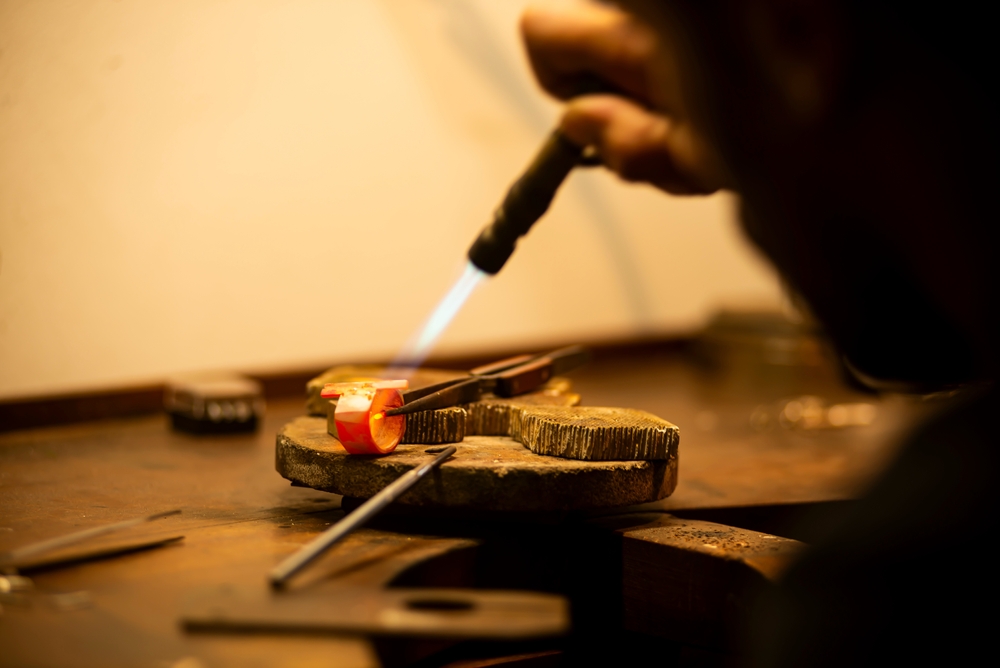
Meanwhile, Juan Patricio specialized in luxury jewelry, combining noble metals such as gold and silver with precious stones. Both share that almost genetic obsession with detail, a quality difficult to find in Creole jewelry of this level.
In addition, another respected name on this circuit is that of Sergio Sánchez, a craftsman with decades of experience in his profession, specializing in the manufacture of cutlery, wine glasses, belt buckles and custom-made jewelry. In fact, more than 50% of his customers are fellow countrymen who commission him with their work and custom-made items, while the rest of the orders come from the city, as well as from Europe and North America, demonstrating the high quality of his products.
Knives that tell stories
To understand the evolution of the criollo knife, it is enough to travel through time. Museum Las Lilas,Because it houses a collection that speaks for itself.
There coexist some pieces made of carbon steel, forged by hand, complemented with cables made of deer antler, bone or quebracho wood, protected by casings made of raw leather, which were also sewn with twine and polished to resemble silk.
The permanent exhibition also includes a showcase dedicated exclusively to the knives bearing the «J. Fernández» inscription, a local goldsmith whose true identity remains a subject of study for experts.
That is why, when you observe these collections, you become clear about the multifaceted nature of the criollo knife. Far from being limited to being a weapon, it simultaneously served as the gaucho’s main table centerpiece, as his working tool, and as an undeniable symbol of status.
In their origins, the paisanos themselves manufactured their prototypes or turned to the blacksmiths of the village. Therefore, today the knife makers of Areco maintain that direct and personal connection with the customer.
Thanks to this, ordering a custom piece means taking the time to choose the type of blade, the wood for the handle, and the design of the bezel. It’s a meticulous process that can take weeks or even months, but the wait is simply worth it.
Leather, straps and mounts
However, if silver is the emblem metal of the people of Areco, leather is undoubtedly its skin. The tanning in the pampa is an ancestral craft, fused with European techniques that the gauchos adapted to their needs.
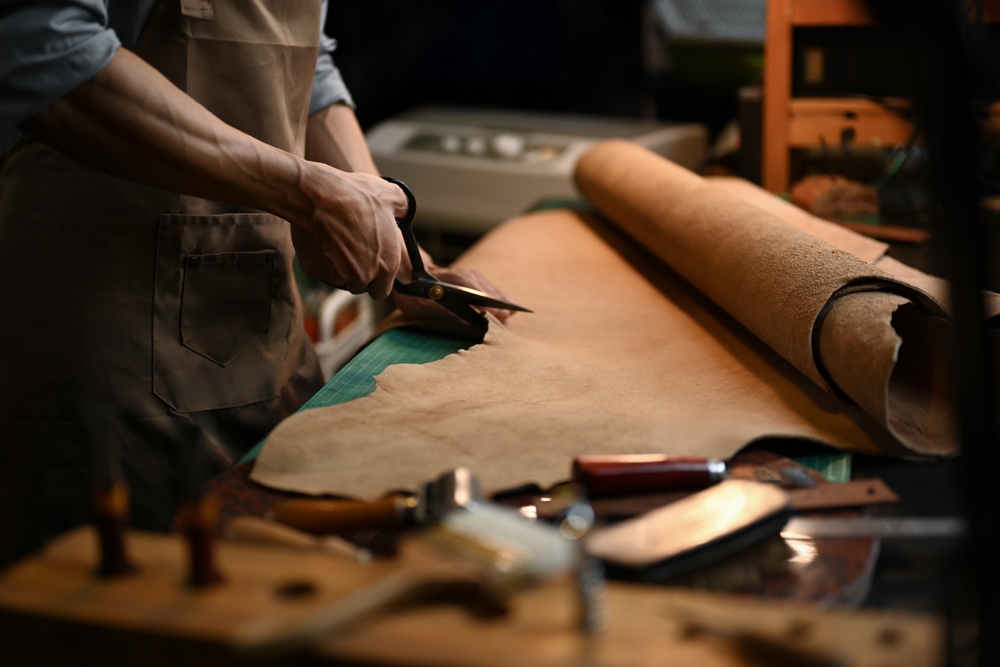
This involves weaving strips of raw leather without finishing them to make the reins, horse leads, harnesses, straps and all kinds of accessories. Meanwhile, local artisans like Carlos, who has more than thirty years of experience, are giving workshops for visitors to cut, sew and mend their own pieces to take home.
Regarding the handling of raw leather, it retains its natural beige color, preventing it from being treated with chemicals. This austerity is precisely what enhances its value. Generally, a well-made bridle can last for decades and, over time, the leather darkens, acquiring a particular shine that cannot be achieved with industrial products.
Meanwhile, the mounts have their own chapter, as the tailors of Areco are the best at making riding saddles, harnesses, blankets, and all the rural work equipment. Some accept custom orders with engravings, silver inlays, and anatomical adjustments.
That is why it is not uncommon to see a fellow countryman looking for a frame that he ordered half a year ago. It is precisely that patience and the trust placed in the hands of the craftsman that sets the Areco haberdashery apart from any other mass-produced product.
Where to find them and how to explore the town
The historic center of San Antonio de Areco is small and easy to walk around on foot. The jewelry workshops are concentrated near Arellano Square and on Lavalle Street. Mariano Draghi’s workshop is at Lavalle 387, while his brother Juan Patricio’s workshop is at Arellano 45. Both of them accept appointments in advance.
He Gauchesco Museum Ricardo Güiraldes It is another of the must-visit places. It was inaugurated in 1938 on the banks of the Areco River. In addition, there is the Pulpería La Blanqueada, declared a National Historical Monument in 1999 along with the Casa del Museo. Among its rooms are some pieces of ancient jewelry, armor, crossbows, and other objects from the gaucho way of life.
For his part, the Museum Las Lilas It has a permanent collection of original works belonging to Florencio Molina Campos and a room dedicated to the criollo knife. It is open from Monday to Sunday from 10:00 to 13:00 and from 16:00 to 19:00 hours. La Recova Art Museum, In Zapiola and Segundo Sombra, it also operates at the same time.
The best time to visit
Although it is possible to purchase the handicrafts throughout the year, the best time to experience a more complete experience is during La Fiesta de la Tradición, which takes place on the weekend closest to November 10, when José Hernández, author of Martín Fierro, celebrates his birthday.
This festival begins eight days earlier and includes skill-building activities in Parque Criollo, country dances at Pulpería La Blanqueada, and Arequera craft exhibitions at the Guerrrico Hall.
Tips for those who buy seriously
- Ask to see the workshop. Most artisans have no problem showing where and how they work.
- Ask about the origin of the materials. For example, the silver must be sterling silver, the leather, preferably local cow or horse leather, and the wood of the knife’s blade is usually quebracho, algarrobo, and lapacho.
- Don't expect to get a complex piece in a day. That is, a knife with a carved handle and engraved curve can take between fifteen days and two months. The same goes for a custom-designed belt buckle. Plan ahead.
- Compare prices, but don't look for the cheapest one. Jewelry and cutlery have fixed costs for raw materials and labor, which cannot be reduced without sacrificing quality.
- If you are interested in the monturas, you should make an appointment, as the tailors in Areco usually work on commission and have waiting lists.
Frequent questions
Is it possible to visit San Antonio de Areco in one day from Buenos Aires?
Of course you can, as the trip takes approximately an hour and a half. You can also get there from the Retiro terminal. If you arrive early, you can explore the historic center, visit a museum, have lunch at a local grill, and visit several workshops.
Can the parts be ordered remotely?
Indeed, since most cutlery and knife makers take orders by phone or email. However, for more complex pieces, it is most advisable to visit the workshop and discuss the details in person.
Is there a difference between buying at the Fiesta de la Tradición and buying at the workshops throughout the year?
The difference is simply the atmosphere, not the price. Since it is a festive event, everything will be more colorful and dynamic, whereas during the rest of the year, the attention is more personalized.
Can they be paid with a credit card?
In this case, some workshops and museums accept cards. However, in Areco cash is still the most reliable method of payment.
What other crafts are there besides silver and leather?
In the village you can find textiles, ceramics, carved wooden objects and products made from honey and handmade sweets.
Useful links
- Gauchesco Museum Ricardo Güiraldes – History, schedules and location of the museum complex inaugurated in 1938.
- Mariano Draghi – Platero Orfebre – Creole silverwork workshop and museum in Lavalle 387, San Antonio de Areco.
- Museum Las Lilas – Collection of works by Florencio Molina Campos and exhibition of criollo knives in Moreno 279.
- Tradition Festival 2025 – Full program of the 86th edition, from November 14 to 16.
- La Recova Art Museum – Art gallery located in Zapiola and Segundo Sombra, open from Monday to Sunday.
- Areco Tradición – Soguería Workshop – Reservations for the pampean wickerwork workshop with Carlos, a craftsman with more than thirty years of experience.
Table of contents
- The heartbeat of Creole jewelry
- Knives that tell stories
- Leather, straps and mounts
- Where to find them and how to explore the town
- The best time to visit
- Frequent questions
- Is it possible to visit San Antonio de Areco in one day from Buenos Aires?
- Can the parts be ordered remotely?
- Is there a difference between buying at the Fiesta de la Tradición and buying at the workshops throughout the year?
- Can they be paid with a credit card?
- What other crafts are there besides silver and leather?
- Useful links